Why Tenants Need Forensic Accountants to Fight Corporate Landlords

In the battle against Wall Street-backed landlords, tenants usually rely on leases, receipts, and bank statements to prove they paid their rent. But what happens when the landlord admits their own books are wrong, yet refuses to fix them? What happens when they claim a “computer glitch” erased your payments, but then object to your evidence of that glitch as “hearsay” in court?

This is exactly where I find myself in Stuart v. Brookfield Properties. After six years of perfect payment history, I am fighting a fabricated debt that appeared out of thin air. My experience proves that to fight modern algorithmic landlords, tenants need more than just truth—we need Forensic Accountants.


Video about need for a Forensic Accountant

Here is why a Forensic Accountant is the only key that unlocks the truth in modern housing court.

1. The “Hearsay” Trap: How They Hide the Evidence

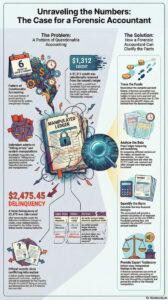
In my case, the landlord’s own system (BILT) showed I had a credit of $1,312. Then, on July 24, 2025, that credit was manually reversed, and a debt of $2,475 appeared.

When I brought screenshots of these logs to court to prove the manipulation, Brookfield didn’t argue the logs were fake. Instead, they argued that my screenshots were “unauthenticated, inadmissible hearsay”.

This is the trap: Corporate landlords know that pro se tenants cannot easily “authenticate” complex digital database logs. They use the Rules of Evidence to blind the Judge. A Court-Appointed Forensic Accountant solves this. As an expert witness and officer of the court, the accountant accesses the data directly. Their report is admissible evidence, bypassing the hearsay trap entirely.

2. “System Error” vs. Manual Fraud

Corporate landlords love to blame “software transitions” for billing disputes. In discovery, Brookfield admitted under oath that my ledger was “recalculated” in July 2025 due to a “system error” and a transition to Yardi software.

But a “system error” is often a cover for human manipulation. My internal logs show the credit was removed via a specific command: “Prog Gen Reverses receipt”. This suggests a manual override, not a random glitch.

A forensic accountant looks at the metadata—the digital footprint. They can answer the questions the landlord refuses to answer:

  • Who logged in on July 24 to change the numbers?
  • When was the file created?
  • Why were late fees backdated to months that were already closed?.
3. The “Closed Lease” Doctrine

Standard real estate accounting follows GAAP (Generally Accepted Accounting Principles). One basic rule is that you cannot retroactively change the financial history of a closed lease term.

In my case, Brookfield verified my account was at a $0.00 balance when we renewed the lease in June 2025. Yet, they later went back in time to add fees to 2024. My expert witness, a licensed Texas Broker, attested that “In professional property management, you cannot retroactively remove credits and create debt after a lease term has closed”.

A forensic accountant verifies this violation of accounting standards, proving that the new ledger is not just “inaccurate,” but professionally invalid.

4. Protecting Federal Funds (The Section 8 Factor)

This isn’t just about my money; it’s about taxpayer money. Under the Housing Assistance Payment (HAP) contract, a landlord cannot make a tenant pay for the Housing Authority’s portion of the rent.

Brookfield admits they moved money to the “HAP Ledger” to fix a “misapplication” of funds. Essentially, they are trying to balance their books with the government by charging the tenant. A forensic accountant can trace those specific dollars to determine if the landlord is double-dipping or shifting federal deficits onto vulnerable tenants.

Conclusion: It’s Not a Glitch, It’s a Tactic

As noted in the Harvard Law Review, “Property manager abuse is endemic in Project-Based Section 8 housing,” often relying on the fact that tenants lack the resources to audit the complex financial systems used against them.

We need forensic accountants to prove that what landlords call “system errors” are often systemic features designed to extract money and facilitate eviction. In Stuart v. Brookfield, we are fighting to force the Court to look at the raw data—because the math doesn’t lie, even when the landlord does.

Download Infographic on the Need for a Forensic Accountant


Michael Stuart is one of the extraordinarily rare individuals who sits at the intersection of military discipline, real-estate insight, advanced technology — uniquely qualified to advocate for affordable housing.

View Plaintiff Argument for a Court Appointed Forensic Accountant