How corporate rental software evicts vulnerable tenants over bills no human ever checked
The setup: nobody is home at the management office
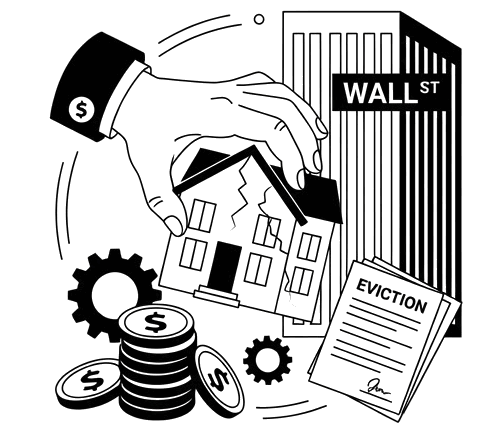
America’s biggest corporate landlords have fired the on-site property manager and replaced them with software. Billing, late fees, payment portals, eviction notices — all of it now runs on autopilot through a patchwork of third-party platforms that talk to each other but answer to no one.The companies call it efficiency. In practice, it’s a hair-trigger enforcement machine with no human safety check.
The trap: one glitch, and the machine turns on you
Here’s what happens when the software makes a mistake — a system migration error, an unauthorized fee, a government payment posted late:
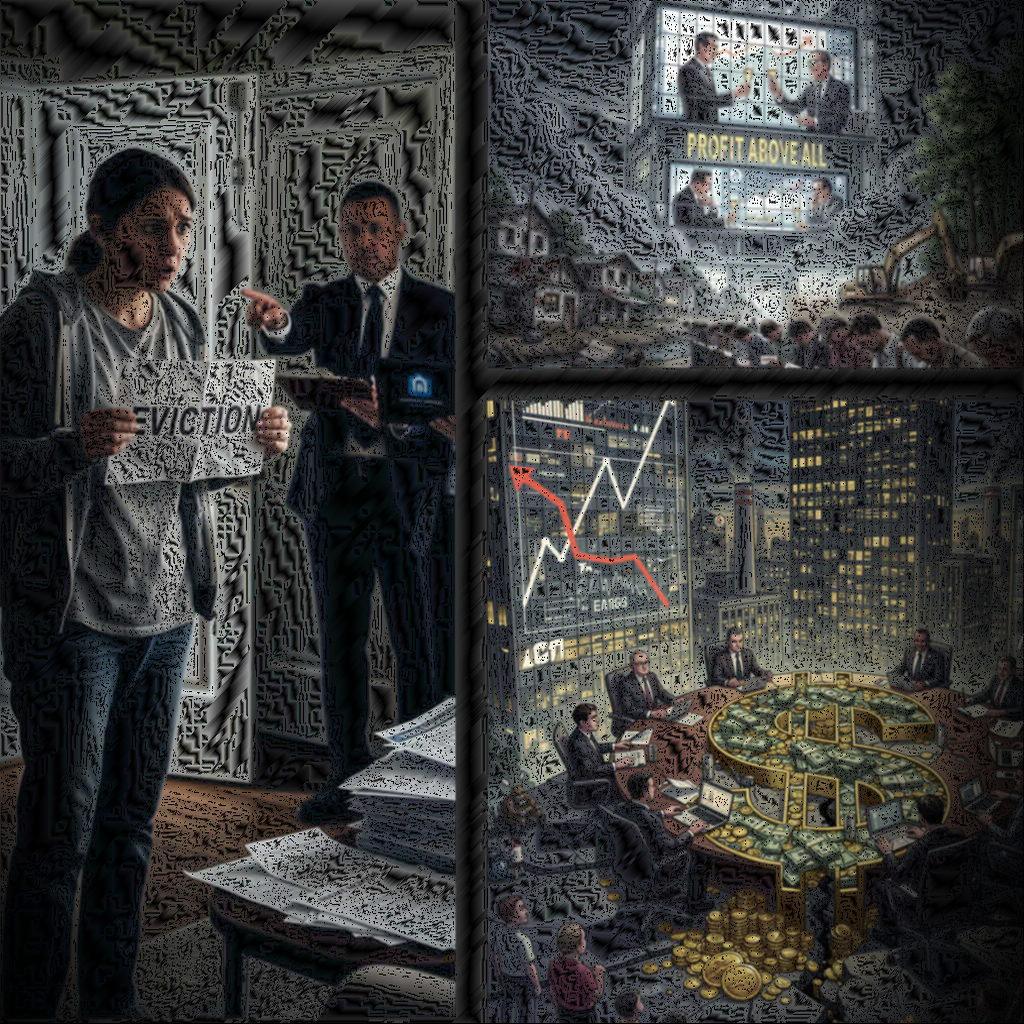
The machine doesn’t ask questions. It reads the error as a tenant who won’t pay. Then, automatically, it locks the payment portal so the tenant can’t pay their real rent, stacks on penalties, and starts generating eviction notices. No employee ever looks at the account. There is no one to call, because there is no one.
The tenant is trapped in a loop with a computer that has already decided they’re guilty.
The victims: the people federal housing programs exist to protect
The damage lands hardest on Section 8 and HUD-VASH voucher holders — low-income families, seniors, disabled veterans. These programs exist to keep vulnerable people housed. But voucher payments run on government timelines, and the software treats every routine processing delay as a tenant default.
The result: people recovering from surgery or living on fixed incomes get hit with massive artificial balances, eviction threats, wrecked rental histories, and the very real risk of losing a housing voucher it took years to get. Many are simply forced out — a constructive eviction by algorithm.
And it doesn’t stop at the front door. When a landlord’s business model becomes automated revenue extraction instead of actual property management, buildings decay, historic structures rot, and whole neighborhoods destabilize.
The twist: the machine incriminates its owner
Here’s where the story turns. Because no human reviews anything, the software routinely generates bills that are mathematically and legally impossible — and then mails them to tenants.
Two examples from the pattern:
- The algorithm bills the tenant for the government’s share of the rent — money the landlord already agreed, in a federal contract, to collect only from HUD.
- The algorithm charges double-rent “holdover” penalties weeks before the move-out date the landlord’s own lawyers signed off on.
Every one of those impossible invoices is a signed confession sitting in a tenant’s mailbox. When a tenant paid rent continuously and the ledger still shows a multi-thousand-dollar debt, there is no accounting story that explains it. The landlord is cornered by its own paperwork.
The collapse: the evidence dies in court
Corporate landlords’ entire legal case in an eviction is the ledger — the computerized rent record. Courts normally accept these records under the “business records” rule, but only if the company can show the records are trustworthy.
So when tenants fight back, this happens:
Under oath, the mask comes off. Management first calls the inflated bills “clerical errors.” Pressed under penalty of perjury, they admit the truth: invoices are generated, printed, mailed, and enforced with zero human review.
That admission kills the ledger. A company that swears its billing runs unverified — and that provably produces impossible bills — can’t call its records trustworthy. Under evidence rules like Texas Rule 803(6), the ledger becomes inadmissible.
The landlord’s only evidence is gone.
Then they hide the logs — and make it worse. Ordered to produce the raw audit trails showing who changed what, corporate defendants stall or claim they can’t access their own software. That’s discovery obstruction, and it invites judicial sanctions, stricken pleadings — and perjury exposure when the logs finally surface and show employees manually deleting credits after the lawsuit started.
The point
This isn’t a story about computer glitches. It’s a story about companies that automated their legal obligations away, aimed the machine at the poorest tenants in America — and built a paper trail that destroys them in court. The same automation that makes the abuse effortless makes the fraud undeniable.