

Modern corporations love automated management software. It cuts labor costs, automates billing, and streamlines collections.
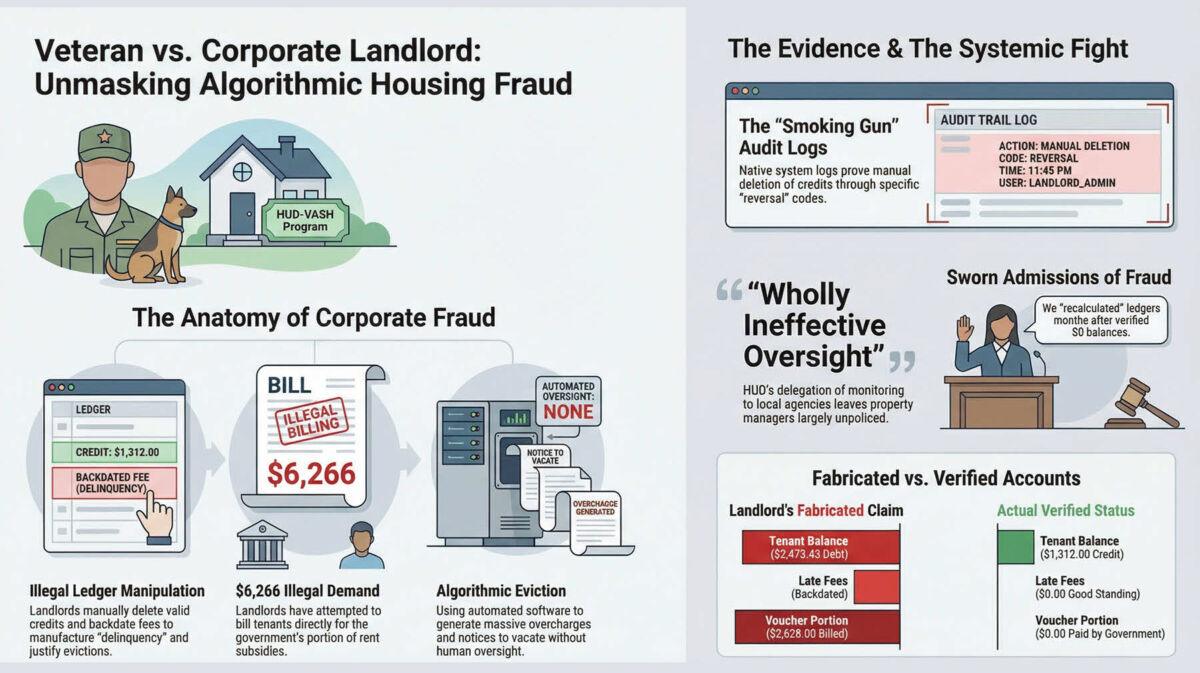
But when these systems run on “autopilot” without human oversight, convenience quickly turns into a severe legal trap. Here is how unchecked corporate software can create massive legal leverage for consumers and litigants in court.
1. The “Autopilot” Hearsay Trap
To use computerized billing records as evidence in court, a business must prove those records are accurate and regularly monitored.
When an automated system fires off wildly inaccurate or illegal bills, the corporation faces an impossible legal choice:
- Admit a human reviewed the bill: This admits intentional wrongdoing or harassment. -OR-
- Admit no human reviewed the bill: This proves their database operates without oversight, rendering their entire accounting system legally untrustworthy and inadmissible as evidence.
By removing human review, corporations strip their own records of legal credibility.
2. Digital Audit Trails Don’t Lie
Corporations frequently try to dismiss billing errors as harmless “system glitches.” However, modern software platforms generate native transaction logs that record every click, override, and deletion. Forensic audit trails easily expose whether an issue was a true computer error or a manual, retaliatory edit disguised as a software mistake.
3. The Consequences of Evading Court
When automated errors create indefensible legal positions, corporate legal teams sometimes stall or miss court hearings altogether. Skipping a hearing—especially one regarding discovery or sanctions—is a procedural disaster.
When a judge reserves ruling on sanctions and orders mediation first, the corporation enters negotiations under the immediate threat of heavy judicial penalties if they fail to settle.
Key Takeaways for Consumer Accountability
- Challenge Automated Evidence: Never accept a computer-generated ledger as absolute truth. Force the company to prove human oversight. Demand
- Native Transaction Logs: Always request digital audit trails showing who made changes and when.
- Use Procedural Leverage: When a opponent misses court deadlines or ignores orders, let the rules of court do the heavy lifting.
- Secure Complete Relief: A financial settlement is useless if negative records remain. Always require a complete record wipe, debt waiver, and credit protection. The
Moral of the Story: Stay in the Fight
When you are going up against a massive corporate opponent, it is easy to feel outgunned. But when a company relies on unchecked automation, sloppy accounting, and procedural arrogance, you don’t need to out-spend them—you just need to out-last them.
Michael Stuart
At what price victory?