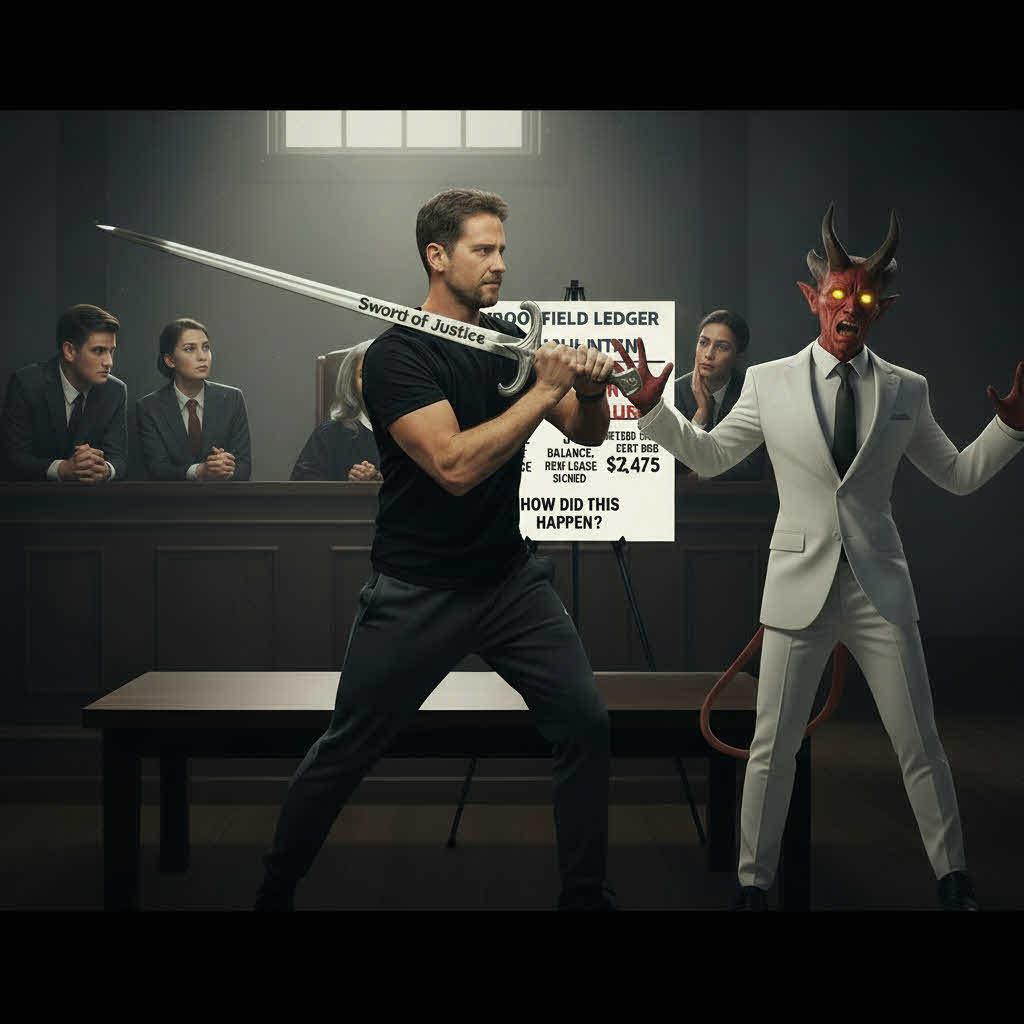
A Dallas veteran uncovered evidence that Brookfield Properties inflated reported rental revenue by charging tenants in federally subsidized housing programs amounts far exceeding what the law allows—sometimes up to ten times the tenant’s legally fixed rent—through its automated billing platform.
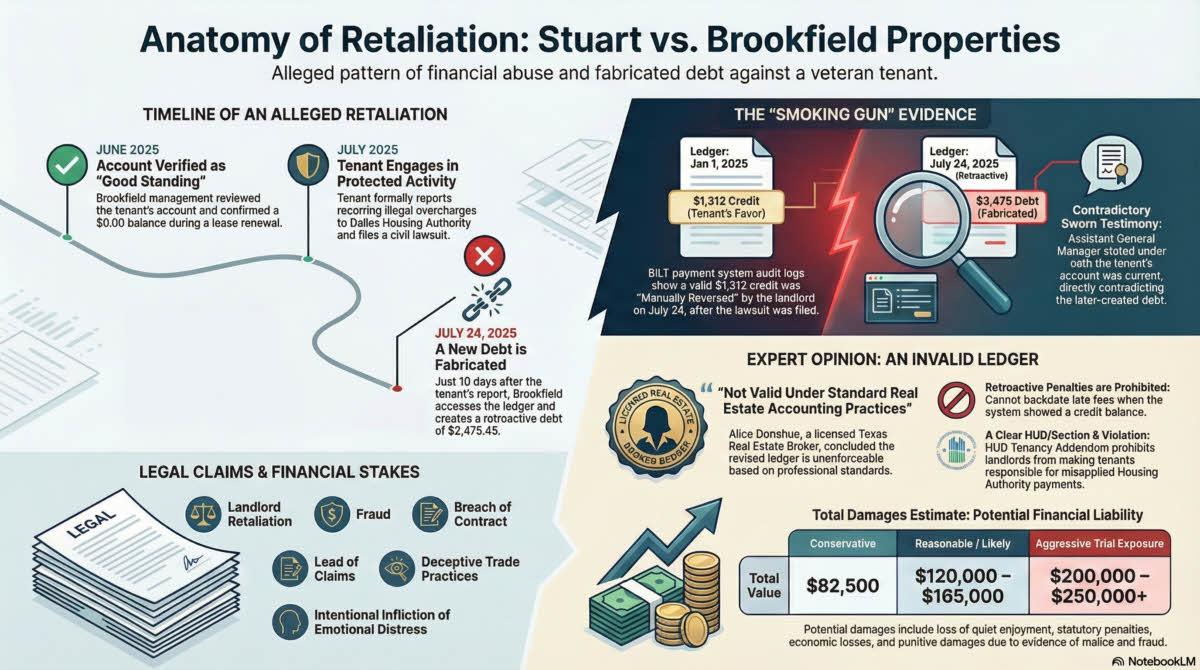
When our veteran confronted Brookfield Properties with documentation showing years of unlawful rent overcharges, the company did not correct the errors. Instead, Brookfield retaliated with a fabricated – retroactive debt — most likely, in an attempt to conceal improper billing charges rather than resolve it.
A Harvard Law Review analysis on corporate landlord abuse explains how weak federal oversight and the absence of HUD compliance audits leave many subsidized tenants unable to detect or challenge illegal overcharges. In that regulatory vacuum, large corporate landlords can operate with little accountability.
Reference “Inside the Dallas Case challenging a Wall Street Landlord”
This case helps strengthen ongoing efforts to hold Wall Street–backed landlords accountable for the predatory use of technology.
Michael Stuart is one of the extraordinarily rare individuals who sits at the intersection of military discipline, real-estate insight, advanced technology expertise, corporate executive experience, and lived understanding of HUD-VASH housing systems.