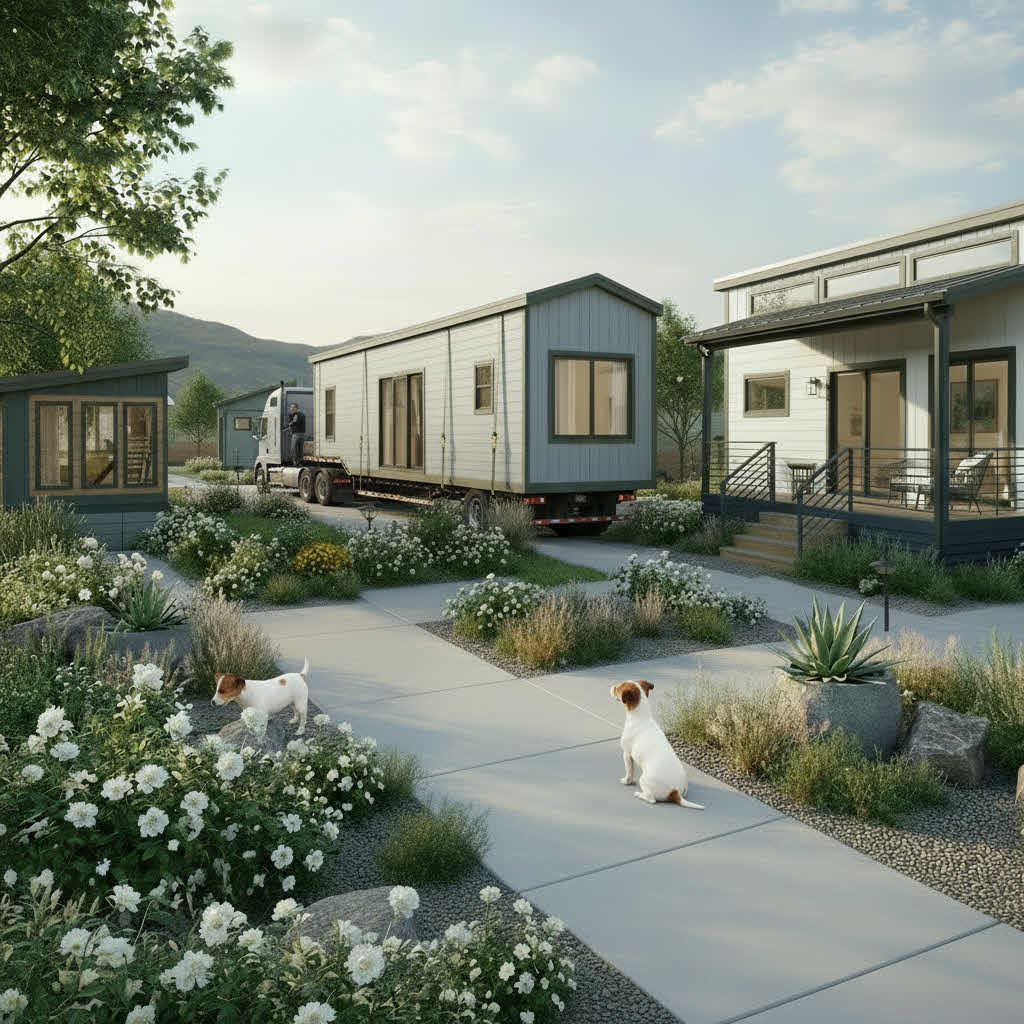
The Tiny Home & Micro-Housing Movement
The tiny home (micro-housing) movement has grown from a niche lifestyle trend into a serious, scalable housing solution. It is driven by innovation, affordability, sustainability, and a cultural shift in how people want to live. Today’s tiny homes and micro-units are not makeshift cabins—they are engineered, efficient dwellings that deliver high-quality living in a compact form.
What Are Micro-Homes (Micro-Housing)?
Micro-homes—also called micro-housing, micro-units, or tiny homes—are small, highly efficient dwellings designed to provide the core functions of a traditional home in a dramatically reduced footprint.
Despite their size, micro-homes typically include:
- A dedicated sleeping area
- A kitchenette
- A full bathroom
- Built-in or “smart” storage
- A flexible living area
- Efficient heating and cooling
- Optional modular or folding furniture
Modern micro-units often feature transforming layouts—fold-down beds, sliding walls, modular cabinetry—that allow one room to serve multiple purposes throughout the day.
Why Micro-Housing Matters
Micro-housing has become a serious tool in urban planning, housing affordability strategy, and community design. These units work particularly well in:
- Urban cores
- Walkable districts
- Transit-oriented development zones
- Adaptive reuse projects
- Underutilized municipal land
- Tight infill lots where traditional construction won’t fit
By concentrating design efficiency into small private spaces, cities can increase density without sprawl and expand access to affordable housing where people already live and work.
Advantages and Challenges of Micro-Homes
1. Deep Affordability
Micro-homes use far fewer materials and require much less land. This leads to:
- Lower construction costs
- Lower utility bills
- Lower ongoing maintenance
- More people able to afford housing near jobs and transit
This is why micro-housing is widely used in Housing First, veteran housing villages, and starter-home initiatives.
2. High Sustainability
Because they consume minimal energy and materials, micro-homes typically offer:
- Lower carbon footprints
- Highly efficient heating/cooling
- Minimal waste
- Opportunity for solar and off-grid systems
This aligns with New Urbanism and climate-focused housing policy.
3. Smarter Land Use
Micro-housing directly addresses modern land pressures:
- Urban overpopulation
- Limited land near job centers
- Rising prices for materials and labor
- The demand for walkable, transit-connected living
Smaller footprints allow cities to repurpose tight parcels, add meaningful density, and create affordable starter housing inside urban cores.
4. Flexible Design & Rapid Deployment
Micro-homes can be:
- Built off-site in factories
- Delivered to location by truck
- Installed quickly with shallow foundations
- Connected together to form “micro-villages”
This speed is why disaster-response agencies, veteran housing providers, and workforce housing programs frequently adopt prefab micro-housing.
5. Strong Community Potential
Well-designed micro-home communities integrate:
- Shared greenspace
- Community gardens
- Walking trails
- Community centers
- Outdoor seating areas
- Laundry and tool libraries
Because homes are small, residents tend to use shared spaces more frequently, naturally strengthening social bonds.
6. A Realistic Path for People on the Margins
Micro-housing can provide the first rung on the stability ladder for:
- Low-income individuals
- Disabled residents
- People exiting homelessness
- Veterans rebuilding their lives
It offers privacy, dignity, and a foothold into a city that would otherwise price them out.
Micro-housing Challenges
Micro-housing works best for single adults or couples—not families with children. It should complement, not replace, traditional family-sized housing. Extended living in small units can increase stress or feelings of confinement if poorly designed. Architects mitigate this by adding:
- High ceilings
- Large windows
- Thoughtful lighting
- Shared public amenities
Without safeguards, some developers may overprice micro-units—turning an “affordable” product into a luxury novelty. Cities must enforce affordability guidelines and anti-speculation policies. If micro-housing is pushed to the outskirts or clustered only with low-income residents, it can create Stigma.
Why the Movement Is Growing Fast
Tiny homes and micro-homes are accelerating in popularity due to:
- Affordability: Homeownership becomes realistic again.
- Speed: Units can be built in weeks, not years.
- Sustainability: Lower water, power, and material use.
- Flexibility: Modular, movable, adaptable.
- Design Quality: Bright, modern, and surprisingly spacious.
Successful tiny or micro-housing is mixed-income, transit-connected, and intentionally designed as part of a broader community. Tiny homes now play a vital role in solving modern housing crises, including:
- Homelessness
- Veteran housing
- Disaster recovery
- First-time homeownership
- Workforce housing
- Aging-in-place communities
As prefab technology advances, tiny homes are poised to become a foundational component of the next generation of American housing—whether as individual homes, modular clusters, or fully integrated micro-villages.
Download an example Tiny Homes Catalog (large file)
More Information
Article: “Using Off-Site Construction to Close the Affordable Housing Gap”
Factory-built housing is not a panacea for the high construction costs that currently inhibit affordable housing production in the US, but the case studies presented here make clear that under certain conditions it can help reduce the cost of high-quality, well-designed housing.
Article: Tiny Homes: A Big Solution to American Housing Insecurity
by Lisa T. Alexander, Texas A&M University School of Law
This law review article by Professor Lisa T. Alexander examines tiny homes villages as a potential solution to America’s housing crisis.
Michael Stuart is one of the extraordinarily rare individuals who sits at the intersection of military discipline, real-estate insight, advanced technology expertise, corporate executive experience, and lived understanding of HUD-VASH housing systems